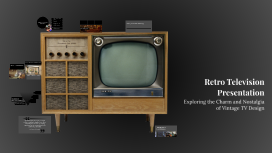
Retro Television Presentation
Transcript: History of Television Technology A chronological overview of the significant advancements in television technology from its origins to the classic models that defined a generation. 1927 1936 1948 1954 1970 1980s Philo Farnsworth made the first working television transmission, marking the birth of television technology. The first public demonstration of television took place in London, capturing the public's imagination. The introduction of commercial television broadcasts began in the United States, transforming entertainment. The invention of the color television set offered viewers a richer viewing experience. The advent of remote controls revolutionized viewer convenience, changing how audiences interacted with television. The era of cable television began, providing viewers with a plethora of channels and new content. 'I Love Lucy' - A Trailblazer in Sitcoms 'The Twilight Zone' - A Unique Anthology Series 'M*A*S*H' - Comedy-Drama with a Purpose 'I Love Lucy' revolutionized television with its innovative storytelling and production techniques, making it a timeless classic that influenced countless sitcoms that followed. The chemistry between Lucille Ball and Desi Arnaz set a new standard for comedic performances on screen. 'The Twilight Zone' captivated audiences with its thought-provoking narratives and unexpected twist endings, blending elements of science fiction and horror to explore complex themes of morality and human nature. Its iconic opening narration remains memorable even today. 'M*A*S*H' cleverly combined humor with poignant commentary on war and society, providing a unique perspective on the lives of medical personnel during the Korean War. Its blend of comedy and drama set a precedent for future shows tackling serious subject matter. Iconic Retro TV Shows Shaped public perceptions deeply Influenced fashion trends significantly Retro Television Presentation Impact of Television on Culture Created shared cultural moments Became a primary news source Evolved community engagement practices Exploring the Charm and Nostalgia of Vintage TV Design Design and Aesthetics of Old School TVs Old School TVs: Warmth and Character Old school televisions were characterized by their warm, wooden cabinets and rounded screens that provided a cozy, vintage feel. The use of dials for tuning added a tactile interaction, inviting viewers to manually adjust their settings, thus fostering a more engaged viewing experience. Modern TVs: Sleek and Functional In contrast, modern televisions feature sleek and minimalistic designs with flat screens that maximize picture quality and space efficiency. Remote controls have replaced manual dials, offering convenience at the touch of a button, but often at the expense of the sensory experience found in older models. Introduction of Color TV Shift from black and white broadcasts to vibrant color, enhancing viewer experience. Rise of Cable and Satellite Expansion of television channels offering diverse content and specialized programming. Transition to Modern Television Emergence of Streaming Services Revolutionized how audiences consume media, providing on-demand access to vast libraries. Understanding the evolution of viewing options helps us appreciate how far we've come in entertainment. Introduction to Retro Television Retro television evokes feelings of nostalgia, transporting viewers back to a time when shows were simpler yet profoundly impactful. Its unique charm lies in the classic storytelling, memorable characters, and the communal experiences it created among families and friends. The nostalgia for old-school television reflects a longing for simpler times, where storytelling was central to the viewing experience, and the connection with the audience was profound. Conclusion and Nostalgia

 Prezi Present

 Prezi Video

 Prezi Design