You're about to create your best presentation ever

Korean Food Presentation Background

Create your presentation by reusing one of our great community templates.

Korean Food

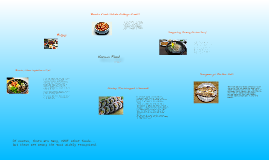
Transcript: While in Korea you will try MANY dishes...here are some of them... Bulgogi Pulgogi is one of Korea's most famous grilled dishes. It is made from sirloin or another prime cut of beef, cut into thin strips. For an outside barbecue, the meat is marinated for at least four hours to enhance the flavor and to tenderize it in a mixture of sesame oil, soy sauce, black pepper, garlic, sugar, onions, ginger, and wine. The marinated beef is cooked on a metal dish over the burner. Whole cloves of garlic, sliced onions, and chopped green peppers are often grilled at the same time. Baechu Kimchi (Whole Cabbage Kimchi) This is the most common, classic kimchi you will find at a Korean meal. It is made from cabbage and spices - including the spicy hot red pepper paste! Historically it was fermented in Kimchi jars stored outside in climate-monitored areas, but today Kimchi can be made with special Kimchi refrigerators! There are over 100 varieties including white Kimchi. Each family typically has their own recipe. Samgye-tang (Ginseng Chicken Soup) The body cavity of a small chicken is stuffed with glutinous rice, young ginseng shoots, and jujubes. The chicken is then boiled in a clear stock and served in an individual earthenware pot. It is highly recommended for those new to Korean food. This dish is famous as summer dish. Koreans try to survive the summer heat with hot stamina food. This wonderful dish is gradually being recognized by the rest of the world. Even if you are skeptical about the properties attributed to ginseng, you will enjoy this dish which is said to give stamina during the steamy Korean summers. Bibimbap (Mixed Vegetables on Rice) A simple but popular dish, bibimbap is a bowl of hot rice served in a bowl topped with a variety of vegetables (cooked and raw) arranged on top. Vegetables can be seasonal, with toraji, bell flower roots, gosari, bracken, bean sprouts, and spinach often served. Other ingredients can include chestnuts, jujubes, ginseng, and a small amount of seafood or meat. An egg may be also served on the top. Most restaurants prepare the dish with a big scoop of gochujang and red pepper paste placed with the vegetables. Most areas of Korea have their own unique way of making Bipambap. It will be unique no matter where you go! Saengseon-gui (Grilled Fish) The Korean way of grilling seafood is to use the entire fish (including the head!) with simple seasonings such as salt, soy sauce, or hot pepper sauce. Popular choices of fish for this style of cooking include snapper, herring, mackerel, sole, and flounder. Grilled squid (ojingeo-gui) is also very popular. Gimbap (Rice Wrapped in Seaweed) Korea's most popular and nutritious convenience meal. You can find it sold everywhere: picnics, schoolchildren's lunch boxes, street venders, and convenience stores. A layer of cooked rice is spread over a square piece of gim (dried laver). Various ingredients (including ham, sausage, spinach, cucumber, crab meat, carrots, and radishes) are thinly sliced and placed on top. The laver is rolled into a tube, sliced into sliced pieces, and seasoned with sesame seeds. The idea was borrowed from the Japanese during the colonial period, but Korean Gimbap is slightly different. Of course, there are many, MANY other foods... but these are among the most widely recognized. For more information go to www.lifeinkorea.com...this was my reference material! Korean Food

Korean Food

Transcript: Sea Salt History Spicy Cabbage Kimchi History & Facts Ingredients and dishes vary by province. Many regional dishes have become national, and dishes that were once regional have proliferated in different variations across the country. Korean royal court cuisine once brought all of the unique regional specialties together for the royal family. Meals are regulated by Korean cultural etiquette. Korean cuisine is largely based on rice, vegetables, and meats. Traditional Korean meals are noted for the number of side dishes that accompany steam-cooked short-grain rice. Kimchi is almost always served at every meal. Commonly used ingredients include sesame oil, doenjang, soy sauce, salt, garlic, ginger, pepper flakes, gochujang and cabbage. Rinse the salt from the cabbage leaves and then drain and squeeze out any excess liquid. Place the cabbage in a large container with a tight fitting lid. Stir in the fish sauce, green onions, white onion, garlic, sugar and ginger. Sprinkle the Korean chile powder over the mixture. Wear plastic gloves to protect your hands and rub the chile powder into the cabbage leaves until evenly coated. Seal the container and set in a cool dry place. Leave undisturbed for 4 days. Refrigerate before serving, and store in the refrigerator for up to 1 month (if it lasts that long!). Chili Powder http://www.foodbycountry.com/Kazakhstan-to-South-Africa/Korea.html Fish Sauce Nutrition Facts Sources Head of Napa Cabbage Green onions Preparation http://allrecipes.com/recipe/105179/spicy-cabbage-kimchi/?internalSource=staff%20pick&referringId=700&referringContentType=recipe%20hub&clickId=cardslot%203 Small white onion 2 heads Napa cabbage 1 1/4 cups sea salt 1 tablespoon fish sauce 5 green onions, chopped 1/2 small white onion, minced 2 cloves garlic, pressed 2 tablespoons white sugar 1 teaspoon ground ginger 5 tablespoons Korean chile powder Cut the cabbages in half lengthwise and trim the ends. Rinse and cut into pieces about 2 inch square. Place the cabbage into large resealable bags and sprinkle salt on the leaves so they are evenly coated. Use your hands to rub the salt in to the leaves. Seal the bags and leave at room temperature for 6 hours. Korean Food Korean food is often very spicy. Red pepper paste, green onion, soy sauce, bean paste, garlic, and ginger are just some of the many seasonings Koreans use to flavor their dishes. The food is served with a bland grain such as rice to cool the heat of the spices. Garlic Ginger Sugar

Korean Culture Food presentation

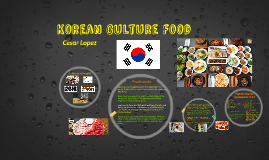
Transcript: Korean cuisine is largely based on rice, vegetables, and meats. Traditional Korean meals are noted for the number of side dishes Grains have been one of the most important staples of the Korean diet. Early myths of the foundations of various kingdoms in Korea center on grains. most meat in Korea was likely obtained through hunting and fishing. Ancient records indicate rearing of livestock began on a small scale during the Three Kingdoms period; beef chicken and pork. Korean cuisine uses a wide variety of vegetables, which are often served uncooked, either in salads or pickles, as well as cooked in various stews, stir-fried dishes, and other hot dishes. JAE BU DO 4.2 (62) · Korean Unfussy nook for Korean BBQ, open late 474 N Western Ave Opens at 3:00 PM Cesar Lopez A little about myself Genwa Korean BBQ 4.4 (250) · $$$ · Korean Barbecue Restaurant Wood-accented eatery where diners cook Korean BBQ dishes on smokeless grills at their tables. 5115 Wilshire Blvd Hip · Upscale · Casual Opens at 11:30 AM Popular Korean Restaurants in LA Traditionally Soups are a common part of any Korean meal. Unlike other cultures, in Korean culture, soup is served as part of the main course rather than at the beginning or the end of the meal, as an accompaniment to rice. Kimchi refers to often fermented vegetable dishes usually made with napa cabbage, Korean radish, or sometimes cucumber, commonly fermented in a brine of ginger, garlic, scallions, and chili pepper.[ Noodles or noodle dishes in Korean cuisine are collectively referred to as guksu in native Korean or myeon in hanja. Traditional rice cakes, tteok. Tteok refers to all kinds of rice cakes Korean Culture Food Oo-Kook Tofu & BBQ 4.3 (94) · Korean Restaurant Modest eatery featuring Korean tofu soups along with noodleBBQ meat platters. 2201 W Commonwealth Ave (626) 289-8494 Casual · Good for kids · Groups Opens at 11:00 AM Road To Seoul B.B.Q 4.2 (71) · Korean Barbecue Restaurant Alhambra, CA All you can eat · Hip · Casual Opens at 11:00 AM

Now you can make any subject more engaging and memorable